In Conversation
an Interview with Laura Bardier
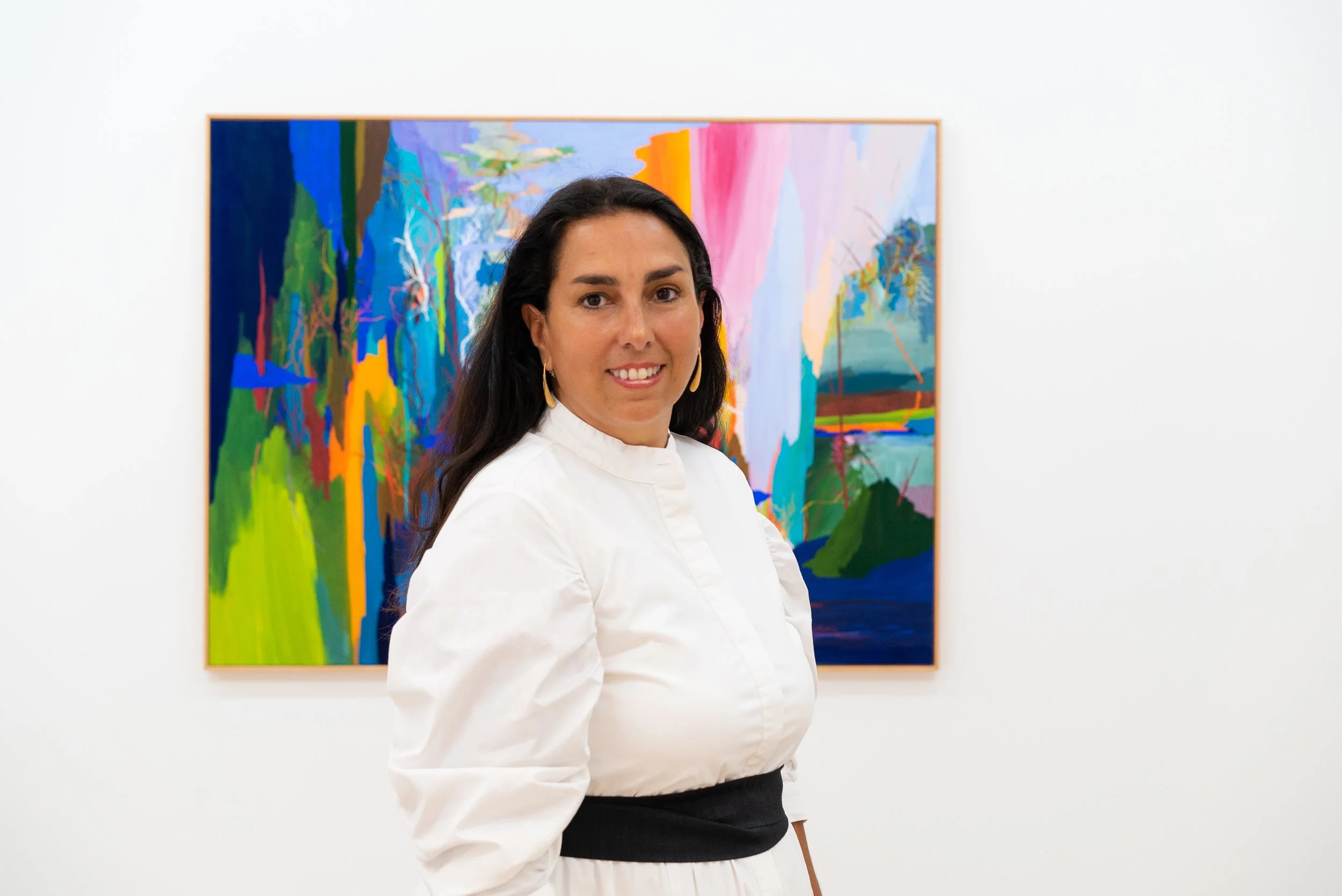
Courtesy of Laura Bardier
an Interview with Laura Bardier
[the] GFA Journal: Issue 01. B
Laura Bardier is the founder and director of Este Arte, a Uruguay-based foundation and art fair working at the intersection of Latin American art, criticism, and the market. Este Arte has become known for its lean, intentional approach to fair-making, a deliberate departure from the expansive model that dominates the commercial art world. In this conversation, Bardier speaks with GFA Executive Director Dina Giordano about regional identity, queer portraiture, diaspora, and what it means to build generosity into a process defined by judgment and rejection.
GFA: What was the founding impulse behind Este Arte, and how has its focus evolved since?
ESTE ARTE: began with a structural observation: Uruguay combines political and economic stability, a highly educated and culturally sophisticated cosmopolitan population, strong institutions, social trust, significant private wealth, and a compelling artistic community. What it lacked was a professional platform capable of connecting those elements to one another—and to the broader international art world. I had no interest in importing an existing art-fair model, or simply reproducing European or American ways of working into Uruguay. The more interesting question was: what makes sense here? That led to a specific framework—intimacy rather than scale, depth rather than volume, and sustained relationships rather than constant turnover. The art fair itself is a dispositif—a tool, not the objective. The market remains essential—artists and galleries need functioning economic ecosystems—but transactions are only one measure of impact. We also produce conversations and studio encounters, facilitate institutional relationships, bring museum directors, curators, collectors, writers, and artists into sustained contact, and create the conditions for those relationships to continue long after the fair closes. The ambition was always to build a piece of cultural infrastructure: a platform that could generate opportunity.
There is a phrase commonly associated with Lavoisier that I like very much: “Nothing is lost, nothing is created, everything is transformed.” That is perhaps how I think about cultural infrastructure as well. The objective is not to preserve a format indefinitely; it is to understand what a context needs and have the intelligence to transform with it.
GFA: Este Arte' work is deeply rooted in Uruguay and the broader Latin American art landscape. How does that regional focus inform your programming and choice of artists and galleries in practice, and do you see Este Arte' scope expanding beyond Latin America over time, or is that regional grounding central to its identity?
EA: Uruguay’s idiosyncrasy is central to ESTE ARTE’s identity, and that is a vantage point. Our programming begins with the context in which we operate: José Ignacio, Punta del Este, Montevideo, Uruguay, Argentina, Brazil, and the broader South American ecosystem. That means understanding the artists, galleries, institutions, buyers, collectors, and histories already present in the region, and creating stronger connections among them.
It is not about transferring the same model from Basel to Paris, Hong Kong, Dubai, London, or elsewhere. Without being self-referential, it is centered on the specificities of the context, and that is what makes it exceptional.
It is not about showing Uruguayan artists, South American artists, South American galleries, to South American collectors. I have no interest in South America as a fixed curatorial category. Artists today move constantly between countries, languages, institutions, and histories. Our buyers may be Peruvians living in Madrid, Uruguayans living in São Paulo, Brazilians living in New York, or Senegalese living in Rosario. Personally, I grew up in Montevideo, went to college in Florence, did graduate studies in Austria, worked in Naples, lived in Geneva, and now work in New York. Those movements are part of the reality we want to reflect.
I am interested in relevance and the strength of the proposition, regardless of geography. What matters is what a gallery or artist can contribute to the conversation we are building in Uruguay. So yes, ESTE ARTE has always been international with regional roots. And the ambition is to make Uruguay a stronger point of connection within an increasingly polycentric art world. I am much more interested in continuing to build platforms with a clear point of view than in becoming “global” simply by accumulating geographies. ESTE ARTE exists because, in this particular place and at this particular moment, it performs a function that is needed. I don't believe institutions should exist simply in order to perpetuate themselves. If one day that function is no longer necessary, then ESTE ARTE should evolve into something else.
GFA: Where do you see natural points of contact between Este Arte's work and the GFA JOURNAL's prompt "The Dialectical Third: Warhol, Influence, and the Global South"?
EA: I am skeptical of the term “Global South.” Categories are never neutral. They are produced from particular historical and geopolitical positions, and they can flatten radically different cultures and histories into a single conceptual bloc. Even a term intended to challenge older hierarchies can end up reproducing a center-periphery logic: someone is still naming the category, defining its limits, and deciding who belongs within it. For me, the point of contact is the question: powered tricycles to transport trash from each neighborhood, and Puerto Ricans have invented unconventional ways to access water while both islands constantly move in multiple directions; they are translated, resisted, absorbed, distorted, appropriated, and transformed. Yet the structures of validation have historically been far less reciprocal. Who is understood as influencing whom? Who gets to validate whom? And who decides when that influence becomes part of art history?
Warhol becomes particularly interesting through that lens. His work was fundamentally concerned with circulation: the circulation of images, commodities, celebrity, reproduction, and ultimately his own persona. He understood extraordinarily early that cultural value and visibility were becoming inseparable from systems of media, distribution, and recognition.
There is a remarkable reversal of that relationship in Marta Minujín’s 1985 Payment of the Argentine Foreign Debt to Andy Warhol with Corn, “The Latin American Gold.” Minujín symbolically pays Argentina’s foreign debt to Warhol with corn. Warhol is not simply another artist in the work; he functions almost as a proxy for American cultural and economic power, while Minujín turns the transaction into her own proposition about value. She does not ask the center to validate her—she appropriates one of its most recognizable figures and changes the terms of exchange.
That is where I see the “dialectical third”: not as another geography or category, but as the space in which established relationships of influence, value, and authority can be reconfigured.
And that is also close to the logic behind ESTE ARTE. We operate from Uruguay without assuming that cultural legitimacy has to be granted elsewhere first. The platform begins by creating value, relationships, and recognition within its own context, and then connecting that context outward. For me, the objective is not to reproduce an established center-periphery system more efficiently, but to participate in building a more distributed cultural ecosystem in which relevance can be produced from many different points.
GFA: How does queer art in Uruguay and the region approach portraiture and representation? Is there something distinct about a local or regional gaze compared with how queer portraiture tends to be framed in the US or Europe, and are there specific Uruguayan or regional artists whose work you'd place within that broader lineage of queer art, work that grapples with questions of identity and belonging?
EA: I tend to resist categorization, and queer art is not my area of expertise. What I do see, however, is a strong tendency to use portraiture, the body, performance, and self-representation as ways of negotiating visibility, belonging, and social codes. In many cases, the work is less about affirming a fixed identity than about questioning how identity is constructed, performed, or imposed. Artists such as the Uruguayan Ulises Beisso, the Paraguayan-based in Argentina Feliciano Centurión, the Argentine Marcelo Benítez, and the Uruguayan Dani Umpi belong to very different generations and practices, but each, in different ways, complicates conventional ideas of gender, sexuality, intimacy, and representation. What interests me most in these artists is precisely that complexity: queer art in the region does not constitute a single aesthetic language or political position. It is a field of very different strategies for making the self visible.
GFA: How does being a small art fair, 15 booths total, inform your practice as director/founder? You've spoken about Este Arte's approach as lean and intentional rather than expansive, deliberately focusing each booth's exhibition on a single artist. What advantages has this conscious constraint brought for the galleries and collectors who attend?
EA: If a fair presents 15 galleries, each with a solo show, and has a real impact across an entire country and influence across the Río de la Plata region, is that really small? If we can create meaningful sales, long-lasting professional relationships, and critical conversations with 15 galleries, why should we necessarily have 50 or 100? More galleries would mean more artists, more infrastructure, more expense, more staff, more logistics, and a larger carbon footprint—not necessarily more impact. For me, in this case, efficiency is not a limitation; it is part of the model. If we can achieve the same or greater cultural and economic effect with fewer resources, that is a strength.
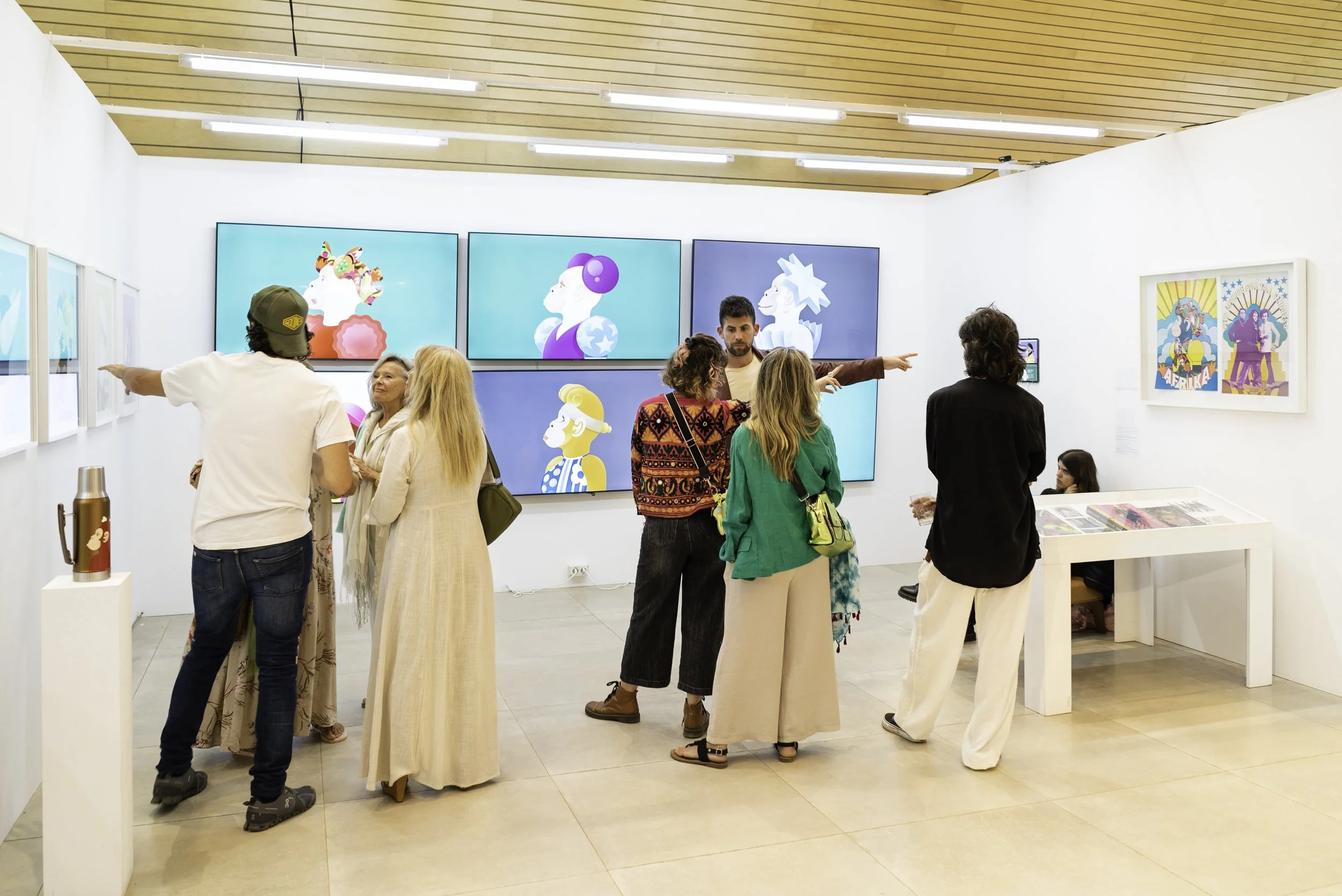
The solo-presentation format reinforces that logic. Each gallery has to make a clear proposition around one artist, and every presentation has real visibility. Collectors can see the entire fair, return to works, have deeper conversations, and actually engage personally with each gallery and artist, and with what is being shown, rather than simply processing volume.
I think of ESTE ARTE as intentionally proportionate to the context in which it operates. Growth, for me, is not about adding booths. It is about increasing the quality and consequence of what already happens there.
GFA: You've mentioned having major collectors on your board of reviewers for the submission committee, and that even in rejecting an artist or gallery, you try to offer a form of generosity through visibility. Can you talk about what that looks like in practice, how do you extend visibility to someone you're turning down, and why does that matter to you?
EA: Selection is necessarily exclusive, but the process does not have to be extractive. Our review committee includes buyers, collectors and cultural figures with real influence in the field, so even when a gallery is not selected, the application is being seen seriously considered. That opportunity matters. A collector may discover an artist they did not know, follow a gallery, make a studio visit later, or encounter that work again in another context. I don’t think generosity means softening standards. It means recognizing the amount of work involved in applying and making sure that the process itself can produce some value, even when the answer is no. For me, that matters because institutions exercise power through selection. If we are going to exclude, we should at least do it in a way that is rigorous, respectful, and capable of creating future possibilities.
GFA: The new discount you shared highlights the leadership paradigm shift in the arts ecosystem, focusing on "happiness." You've mentioned a "happiness discount" set for 2026, a term not typically celebrated in the commercial art fair system. This aligns with the broader trend of leadership change we've observed. How do you see the growing emphasis on happiness, kindness, collaboration, and generosity influencing the arts scene?
EA: Jajaja! The “happiness discount” is intentionally playful, but the idea behind it is serious: institutions shape behavior. The way we communicate, negotiate, select, collaborate, and host people creates a culture. Kindness and generosity do not lower standards; they change the conditions under which people are asked to meet them. I think the arts have sometimes confused seriousness with severity. I don’t believe rigor requires anxiety, opacity, or unnecessary competition. I also think collaboration is becoming more important because no institution operates in isolation anymore. The most interesting projects increasingly depend on networks of artists, galleries, collectors, curators, institutions, and audiences working across different contexts. For me, leadership is not about making everything comfortable. It is about creating clarity, trust, and enough openness for people to do ambitious work. A humane institution can still be a demanding one.
“The goal is not to erase difference; it is to reach a point where difference does not have to function as a prerequisite for recognition.”
—Laura Bardier
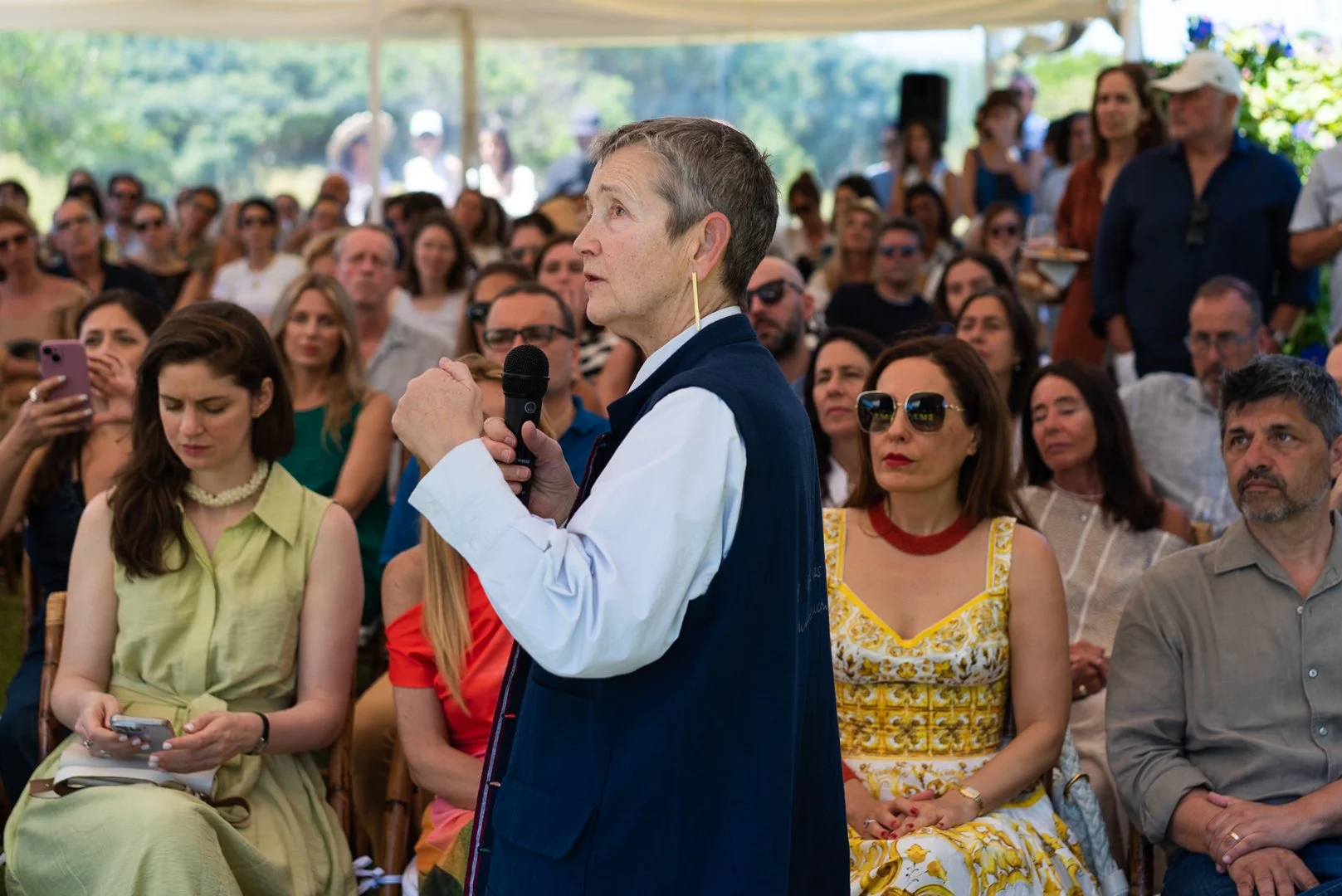
GFA: Art fairs sit at an uneasy intersection of the art object, criticism, and market value, and the market can absorb almost any practice as long as it sells. Some critics argue that one of criticism's most important functions is to keep the market itself in check, to look at art with an awareness of how the market operates rather than being governed by it. Where do you see Este Arte positioning itself in that tension, between reflecting the market and pushing back against it?
EA: I don’t see the market and criticism as opposing forces. The market is part of the ecosystem: artists need to sell work, galleries need sustainable businesses, and collectors play an important role in supporting artistic production. The problem begins when market value becomes the dominant measure of cultural value. ESTE ARTE operates within the market, but it is not governed exclusively by it. The fair is a tool—a dispositif—that allows us to bring together artistic, critical, institutional, and economic forms of value in the same space. That is also why the solo presentations, conversations, curatorial visits, and institutional relationships matter. A work may be commercially successful and still require serious critical engagement; another may have little immediate market visibility but prove culturally important over time. I am less interested in “pushing back” against the market than in preventing the market from becoming the only system through which significance is measured. A healthy sustainable art ecosystem needs several forms of value to coexist, challenge one another, and remain in tension.
GFA: Hans Ulrich Obrist has described the art world as a "polyphonic archipelago" of many centers rather than one, and has pointed to a growing appetite for slower, more durational art experiences over the fast churn of the fair circuit. Given Este Arte' own lean model, where do you see the future of the art fair heading, and does Este Arte see itself moving in that direction?
EA: Of course there is fatigue with the rhythm of the fair circuit, where similar formats move from city to city. What is not exhausting about going from one anonymous convention center to another after hours in bright airports and noisy planes? Who wants to live like that? I’m surprised we didn’t get to this point earlier. I realized that I didn't thirteen years ago! It is true that we are living in an era of information overload and short attention spans. So yes, there may be a greater need to slow down, but maybe more in the sense of slowing down to be less generic and less performative—to create spaces where people can actually look, return, think, and have meaningful conversations. ESTE ARTE has operated that way from the beginning. Its scale allows people to see the entire fair, return to works, speak with galleries and artists, and participate in conversations that extend beyond the transaction itself. The fair becomes one element within a broader cultural experience rather than the sole destination. And we have been living in a world of many centers rather than one forever! Perhaps what has changed lately is that greater recognition is being given to multiple cultural histories and traditions.
I don’t think the future is necessarily a slower art fair. For me, the future of the art field has always been collaborative, inspiring, and always willing to challenge the status quo.
GFA: What's a project or direction Este Arte hasn't yet pursued but that you're hoping to take on?
EA: This is a tough one. Maybe a dancing party?!