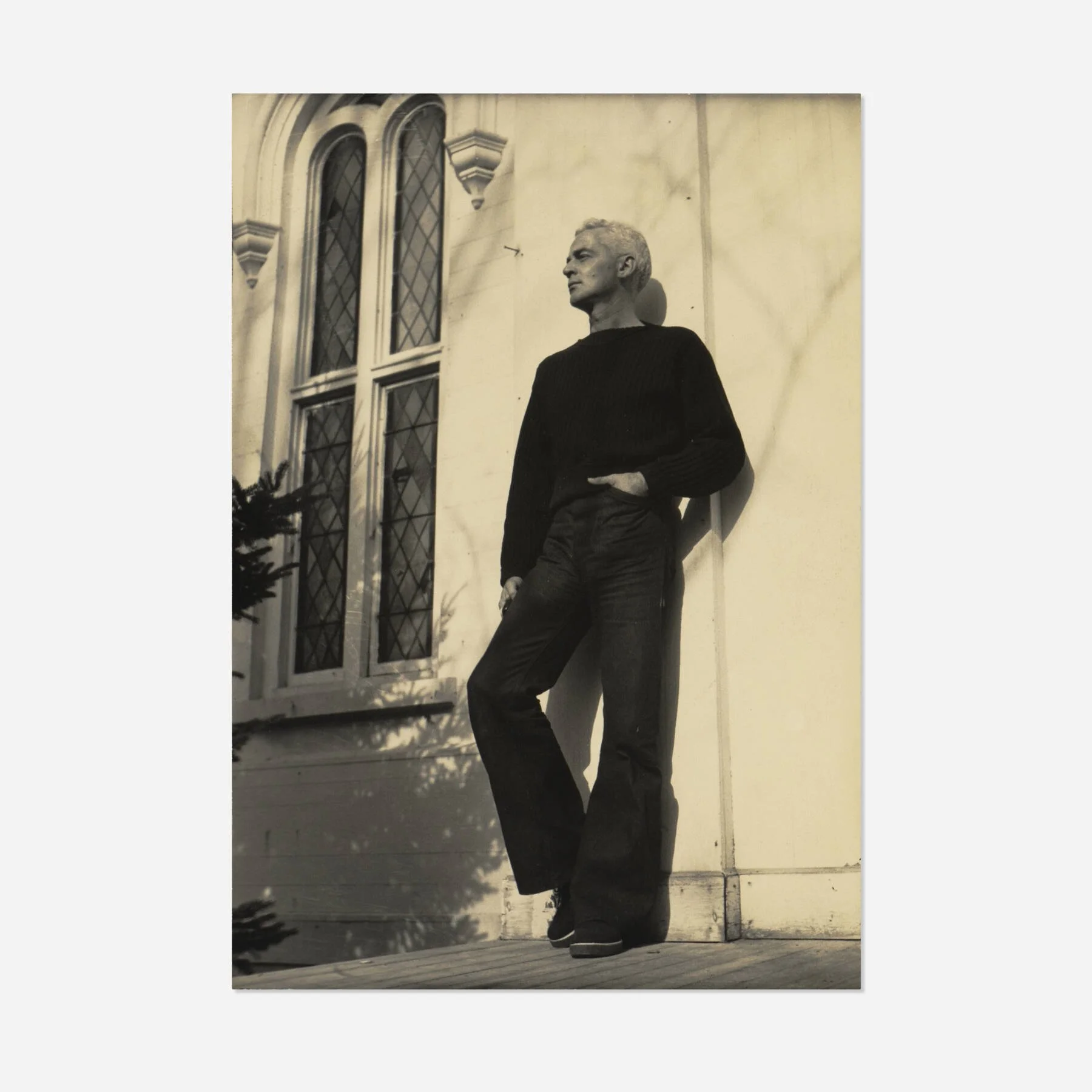
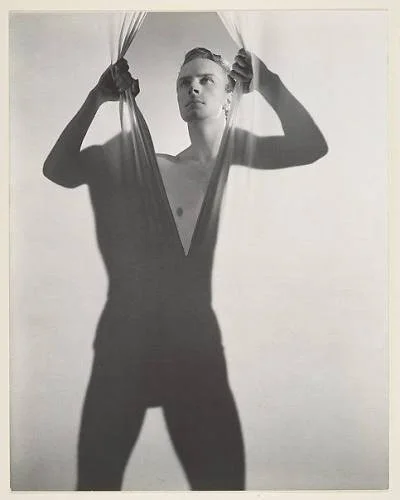

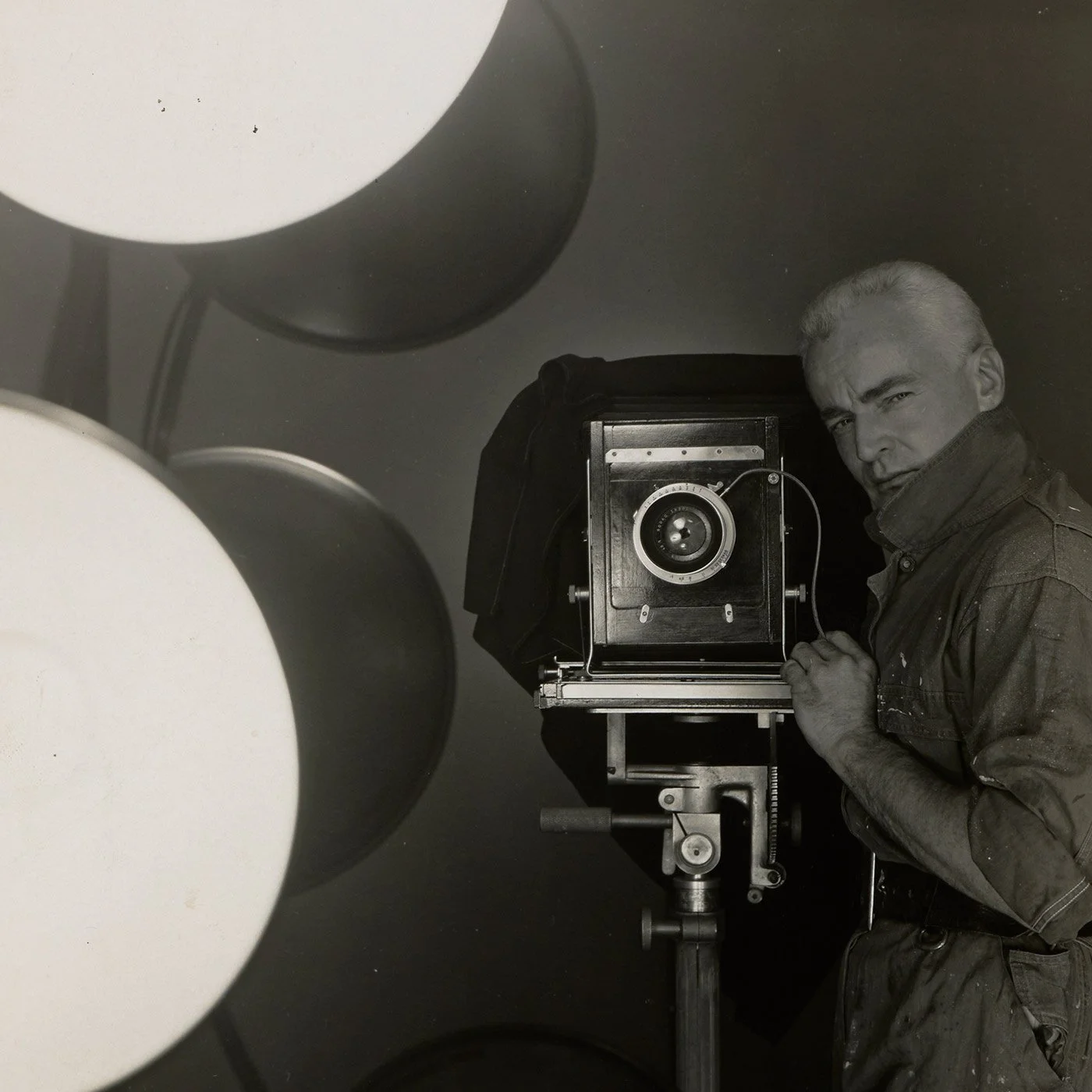
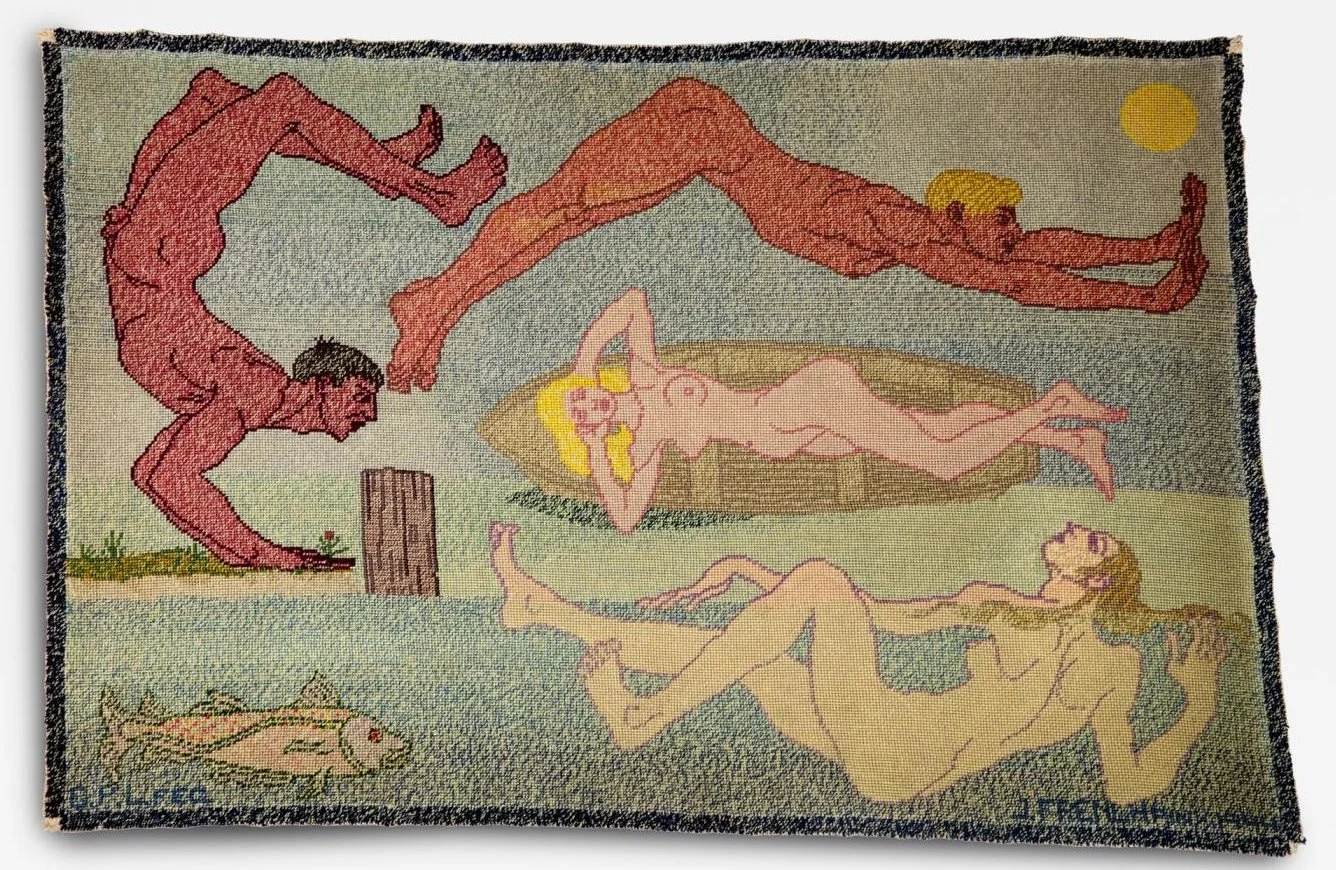
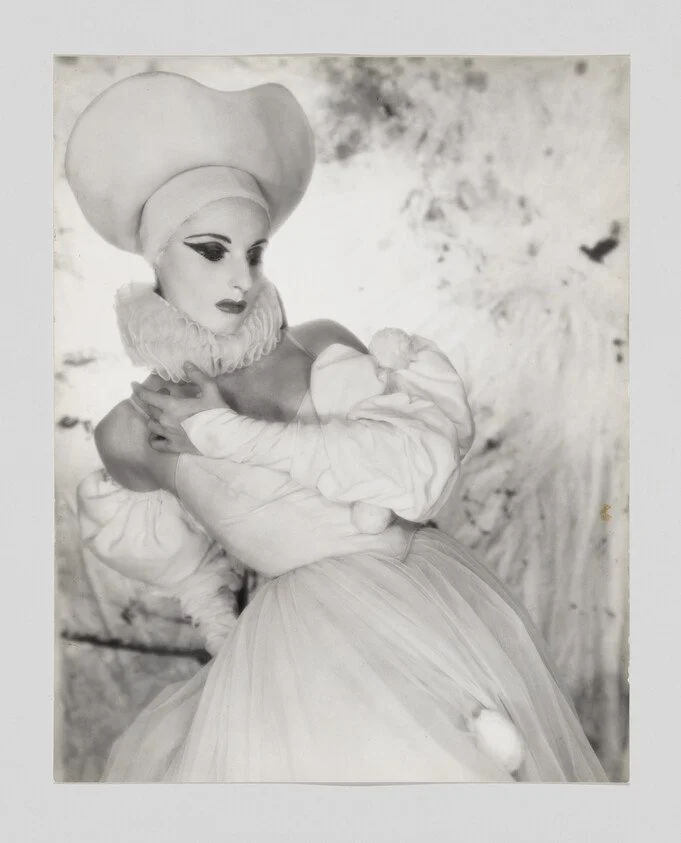
952), Yurek Shabelevsky; October 1939; George Platt Lynes; George Platt Lynes and Jared French; Needlepoint Upholstered; Late 18th/Early 19th c. Chair (1940–41); Self-Portrait (1940s); Untitled (Tanaquil Leclercq), c. 1950. The needlepoint design replicates Jared French’s painting Elemental Play (1946). All works by George Platt Lynes.
Collection highlight/ Queer modernism
Lynes (1907 to 1955). In 1925, his parents sent him to Paris to prepare for college. There, he befriended Gertrude Stein and became part of her vibrant circle of artists and writers. After returning to the US in 1926, Lynes briefly attended Yale University, then left to pursue a short-lived literary life in New York City.
In 1928, he began experimenting with photography, making portraits of family, friends, and lovers. Among them were publisher and museum professional Monroe Wheeler and poet and novelist Glenway Wescott, who remained important creative and romantic forces in Lynes’s life. In 1929, he committed to photography as a vocation, earning a living as a celebrity portraitist while continuing to experiment with male nudes. He quickly found success with editorial fashion commissions for Vogue, Harper’s Bazaar, and Town & Country, as well as luxury brands. In 1935, he became the American Ballet’s first official photographer (the company is now the New York City Ballet), and his success continued through the war years.
Lynes was one of the most successful commercial photographers of his era. Like Warhol, he got his break in fashion, shooting for Vogue and Harper's Bazaar and photographing Balanchine and Kirstein's ballet company, now the New York City Ballet, for years. All the while, he continued photographing male nudes, work he could neither exhibit nor publish, as was also the case for Warhol. After being diagnosed with cancer late in life, he destroyed much of his archive. However, he had already placed many of the nudes and negatives with Alfred Kinsey's Institute for Sex Research at Indiana University, which is largely why they can be seen today.
GFA’s Field Notes
New to the Grove collection, Lynes is a natural fit for the lineage it already holds. His dramatic, shadow-laden staging often recalls Surrealism and contemporaries such as Man Ray and Horst P. Horst. His early staged works play with illusion, reflection, silhouette, and geometric composition, while his private male nudes strip away that staging, leaving something clean and direct. He maintained an interest in the male figure throughout his career and belonged to a close-knit group of artists—including Paul Cadmus, Jared French, Margaret French, and George Tooker—who explored sexuality and the body at a time when abstraction was increasingly favored. The subject of this photograph, Jared French, was an important painter in the world of gay New York artists. Influenced by the Surrealists’ interest in mythology, Lynes created a series of photographic interpretations of ancient Greek legends.
What holds us here is the doubleness: a public career and a private one running side by side, the latter reportedly the work he considered his greatest achievement. Before Mapplethorpe, and in the same register of formal control and desire that Warhol later pursued, Lynes made the male body a subject of looking rather than apology.
https://carnegieart.org/exhibition/george-platt-lynes/
https://www.vogue.com/article/george-platt-lynes-fire-island-photographs